Korean Parts

📍Logistics
ID: 316
14,453.50USDC
Open
72.27% of 20,000 USDC
- Loan period9 months
- Lending APR22.10 %
- Expires23 days, 01:44:52
About
Capacity Co., Ltd. is a South Korea–based B2B export trading company specialising in the wholesale export of Korean automotive spare parts (genuine, OEM and aftermarket components for Hyundai, Kia and Genesis vehicles) and used Korean-manufactured automobiles. The company operates as a trading principal and export consolidator: it sources products from Korean manufacturers and authorised distributors, aggregates orders for overseas buyers, performs quality control and packaging, and coordinates export logistics through the ports of Pyeongtaek and Busan. The company is based in Pyeongtaek, Gyeonggi Province — in direct proximity to tier-one Korean parts suppliers and major export terminals.
The spare parts export line is the core activity, accounting for approximately 75–80% of total revenue, while used vehicle exports contribute roughly 20–25%. Both lines serve the same B2B client base and utilise the same logistics infrastructure. The spare parts portfolio covers three sourcing tiers: genuine parts (via Hyundai Mobis and official channels), OEM components and aftermarket alternatives, with gross margins ranging between 20% and 28%. Used vehicles are sourced through Korean wholesale auctions and leasing companies, with margins of 15–21%. The blended gross margin across both lines is approximately 22–24%.
The operating model is order-driven and asset-light: procurement is performed against confirmed customer orders, which limits inventory risk. The operating cycle begins with a customer advance payment (typically 30–50% of order value), followed by procurement, inspection, packaging and export shipment. Suppliers are paid in full at procurement, while customers settle the remaining balance after receipt of shipping documentation, creating a working capital gap of 20–60 days per transaction. Scalability is linked primarily to working capital availability rather than to fixed infrastructure.
The company was established in late 2023 and funded entirely from the owner’s personal resources: registered capital of EUR 1,333 plus a personal contribution of EUR 78,000 invested during 2023–2024, with no external debt at the start-up stage. In 2024, the first full year of operations, revenue reached EUR 684k. In 2025, revenue grew to EUR 1.2m and net profit rose to EUR 84k. Capacity currently exports to five principal markets — Kazakhstan, the UAE, Libya, Turkey and Kyrgyzstan — with secondary activity in Uzbekistan and Georgia. Client relationships are exclusively B2B, developed through trial orders followed by increasing volumes; the company does not operate under long-term supply agreements. The client base remains relatively concentrated at this stage, with several anchor buyers accounting for a significant share of revenue.
The internal team consists of four employees covering procurement coordination, logistics and warehouse operations. Accounting, tax reporting and customs brokerage are outsourced. The existing warehouse and logistics setup (approximately 640 sq.m) supports 7–10 export shipments per month and does not constrain moderate growth.
Key figure and expertise
Capacity is solely owned and managed by Ten Andrey Vladimirovich (born 1978), who serves as director and sole shareholder. Prior to founding the company, Mr. Ten accumulated over 15 years of experience in the automotive industry: first as co-owner and operational manager of an automotive service centre, then in a senior management position at an automotive dealership responsible for commercial operations, inventory management and supplier coordination. This progression provided hands-on knowledge of vehicle sourcing, parts procurement, B2B pricing and logistics.
Within Capacity, the CEO is directly responsible for all strategic decisions, key client negotiations, vehicle procurement at Korean wholesale auctions and financial oversight. The procurement and client manager handles day-to-day order execution independently, and operational processes are documented, but strategic and commercial functions remain concentrated in a single individual. This creates a structural key-person dependency recognised as characteristic of the company’s current development stage.
Loan Collateral
The EUR 550,000 facility is secured by a two-layer collateral structure combining existing company-owned operational assets and the 20 electric vehicles acquired under the Georgia contracts using loan proceeds. Collateral is valued at both nominal and conservative liquidation values, with liquidation discounts of 20% for existing operational assets and 10% for contract vehicles.
Collateral composition and coverage
Collateral source | Nominal value (EUR) | Liquidation value (EUR) |
Existing operational assets (80%) | 61,290 | 49,032 |
Contract vehicles / assigned rights (90%) | 590,000 | 531,000 |
Total collateral | 651,290 | 580,032 |
Coverage metric | Value |
Loan principal | EUR 550,000 |
Total collateral (nominal) | EUR 651,290 |
Total collateral (liquidation) | EUR 580,032 |
Nominal coverage ratio | 1.18× |
Liquidation coverage ratio | 1.05× |
● Existing operational assets include warehouse infrastructure, materials handling equipment, two vehicles (Hyundai Porter II and Hyundai Tucson, both 2021), CCTV, IT equipment and office furniture. Aggregate book value.
● Contract vehicles (20 units — ten Genesis G80 Electrified and ten Hyundai Ioniq 5) form the principal collateral layer. During procurement and transit, vehicles are directly pledged in favour of the lender. After delivery in Batumi, vehicles are transferred to the buyer on instalment terms with a registered lien in favour of Capacity, recorded in the National Agency of Public Registry of Georgia. The lender’s security transitions from a direct pledge on physical assets to a claim on Capacity’s enforceable contractual rights and security interests, including the registered liens and the right to receive outstanding instalment payments.
● The 90% liquidation rate on contract vehicles reflects the high liquidity and active secondary market for Korean electric vehicles in the 2022–2024 model year range.
Coverage assessment
At liquidation values, the collateral package provides coverage of 1.05× relative to the EUR 550,000 loan principal. At nominal values, coverage is 1.18×. Coverage is adequate but not excessive, which is consistent with the nature of the transaction: the primary source of loan repayment is the contracted cash flow from the Georgia contracts and the company’s ongoing operations, while the collateral provides tangible downside protection. As the buyer settles instalments, Capacity’s cash position improves (reducing effective loan exposure), and fully paid vehicles are released from encumbrance. In the event of buyer default, the registered liens give the lender priority enforcement rights over the remaining vehicles.
Highlights
Max target
20,000 USDC
Min target
10,000 USDC
Investors
48
Interest payments
9 months
Principal repayments
bullet
Total payments
monthly
Risk scoring
- CollateralCompany Assets
- Total risk scoreBBB
- Debt to equity3.16
- LTV95 %
- Credit history8/10
Details
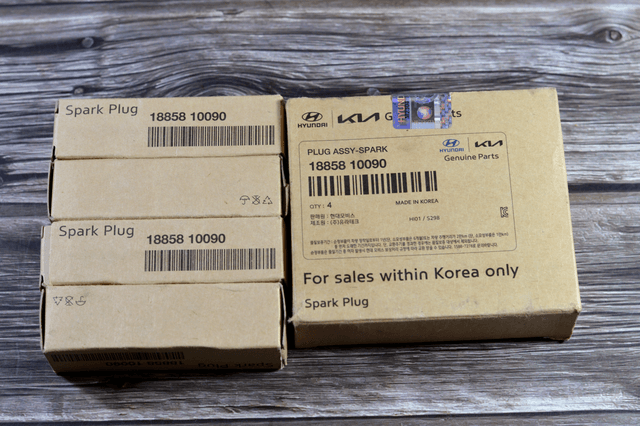
Capacity’s financial track record covers two completed fiscal years: 2024 (statutory accounts audited under Korean Standards on Auditing) and 2025 (management accounts, subject to final statutory closure). Total equity as at the end of 2025 is EUR 174,275, comprising registered capital (EUR 1,333), the owner’s additional contribution (EUR 78,000), retained earnings from 2024 (EUR 11,368) and net income for 2025 (EUR 83,574). The company has not used external debt financing to date.
Historical financial performance (2024–2025)
Income statement (EUR)
Indicator | 2024 | 2025 |
Revenue | 684,124 | 1,202,341 |
COGS | 536,432 | 914,768 |
Gross profit | 147,692 | 287,573 |
OPEX | 131,240 | 189,470 |
Operating profit | 16,452 | 98,103 |
Financial expenses | 3,821 | 5,346 |
Profit before taxes | 12,631 | 92,757 |
Income taxes | 1,263 | 9,183 |
Net profit | 11,368 | 83,574 |
Margin and growth indicators
Indicator | 2024 | 2025 |
YoY revenue growth (%) | — | 75.8% |
YoY gross profit growth (%) | — | 94.7% |
YoY net profit growth (%) | — | 635.2% |
Gross profit margin (%) | 21.6% | 23.9% |
Operating profit margin (%) | 2.4% | 8.2% |
Net profit margin (%) | 1.7% | 7.0% |
Interpretation of historical dynamics
Revenue increased from EUR 684k in 2024 to EUR 1.2m in 2025 (+75.8%). The 2024 figure reflects the first full operating year, during which the primary focus was on supplier onboarding and export workflow development. The 2025 result represents the transition to active scaling, with materially higher shipment volumes across multiple markets.
Gross profit nearly doubled from EUR 148k to EUR 288k (+94.7%), with the gross margin improving from 21.6% to 23.9% as the COGS-to-revenue ratio declined from 78.4% to 76.1%, indicating improved procurement efficiency at higher volumes. Net profit increased from EUR 11k to EUR 84k, with net margin improving from 1.7% to 7.0%. The cost structure shows clear operating leverage: OPEX grew by 44.3% while revenue grew by 75.8%, compressing the OPEX-to-revenue ratio from 19.2% to 15.8%. Financial expenses remained minimal (EUR 3.8k and EUR 5.3k) in both years, reflecting the absence of external debt.
Forecast financial performance (2026–2027)
The projections incorporate the Georgia EV contracts described in the Growth Plan chapter and interest expenses on the planned EUR 550k facility — the company’s first external borrowing.
Projected income statement (EUR)
Indicator | 2026 (F) | 2027 (F) |
Revenue | 1,666,523 | 1,770,485 |
COGS | 1,252,932 | 1,335,202 |
Gross profit | 413,591 | 435,283 |
OPEX | 236,837 | 248,221 |
Operating profit | 176,754 | 187,062 |
Interest expenses | 45,917 | 40,479 |
Profit before taxes | 130,837 | 146,583 |
Income tax | 12,953 | 16,006 |
Net profit | 117,884 | 130,577 |
Projected margin and growth indicators
Indicator | 2026 (F) | 2027 (F) |
YoY revenue growth (%) | 38.6% | 6.2% |
YoY gross profit growth (%) | 43.8% | 5.2% |
YoY net profit growth (%) | 41.1% | 10.8% |
Gross profit margin (%) | 24.8% | 24.6% |
Operating profit margin (%) | 10.6% | 10.6% |
Net profit margin (%) | 7.1% | 7.4% |
Revenue is projected at EUR 1.67m in 2026 (+38.6%), driven by the Georgia EV contracts (combined contract value EUR 800k) and continued expansion of the core export business. The 2027 projection of EUR 1.77m (+6.2%) reflects moderation as the Georgia contracts move into final settlement, with the base business continuing at a steady pace. Gross margin stabilises at approximately 24.8–24.6%.
Operating leverage continues to strengthen: the OPEX-to-revenue ratio declines from 15.8% in 2025 to 14.2% in 2026 and 14.0% in 2027, as the fixed and semi-fixed cost base absorbs higher volumes without proportional growth. Operating profit reaches EUR 177k in 2026 and EUR 187k in 2027.
The most significant structural change is the introduction of external debt financing. Interest expenses rise from EUR 5.3k in 2025 to EUR 45.9k in 2026 and EUR 40.5k in 2027 — an approximately 8.6× increase. The ratio of operating profit to interest expense is 3.9× in 2026 and 4.6× in 2027, well above the 1.5× minimum threshold for basic debt serviceability. Net profit is projected at EUR 118k in 2026 and EUR 131k in 2027, with net margin stable at 7.1–7.4%. Projected 2026 net income alone would add approximately 68% to the current equity base.
Growth Plan of Capacity Co., Ltd.
Beyond the continued development of its core spare parts and used vehicle business across Central Asia and the Middle East, Capacity’s growth plan for 2026 centres on a specific expansion opportunity: the export of Korean electric vehicles to Georgia under a structured two-contract arrangement with LLC Automoby (registration number 446977022, Georgia), an existing commercial counterparty with prior transaction history. Preliminary agreements have been concluded; the contracts are expected to be finalised upon securing external financing. The project uses the company's existing procurement channels and port infrastructure but represents a step-change in average transaction size and introduces electric vehicles as a new product category, while deepening the company's presence in an existing but underutilised export market.
Counterparty and commercial structure
In February 2026, Capacity entered into a preliminary agreement with LLC Automoby for the supply of Korean electric vehicles. The end user of the vehicles is DW AUTO LLC, a Georgian vehicle rental operator expanding its fleet; Automoby acts as the procurement intermediary. The arrangement is structured as two separate contracts, each for a batch of ten vehicles, to be executed sequentially — the second commencing approximately two months after the first shipment is dispatched. Both contracts will be finalised and vehicle procurement will commence upon receipt of external financing.
Contract 1 — Genesis G80 Electrified
The first contract provides for the supply of ten Genesis G80 Electrified vehicles, model years 2023–2024, to be sourced in the Korean wholesale market at an average procurement cost of EUR 35,000 per unit. Delivery is to be arranged on CIF Batumi terms (cost, insurance and freight borne by Capacity), from the port of Busan to the port of Batumi (Georgia). The shipping route runs via the Cape of Good Hope rather than through the Suez Canal, reflecting the ongoing disruption to Red Sea shipping lanes; estimated sea transit is up to three months. The logistics cost includes cargo insurance for the full transit period.
The contract timeline is approximately 11 months from contract finalisation to receipt of the final payment: up to two months for financing, vehicle procurement, pre-sale preparation and export documentation; up to three months for sea transit; and six months of post-delivery instalment payments by the buyer.
Payment terms: 10% advance upon contract finalisation (EUR 47,250); 40% upon receipt of shipping documentation after dispatch (EUR 189,000); remaining 50% in six equal monthly instalments after delivery in Batumi (EUR 236,250 total, approximately EUR 39,375 per month). Total contract value: EUR 472,500.
Contract 2 — Hyundai Ioniq 5
The second contract provides for the supply of ten Hyundai Ioniq 5 vehicles, model years 2022–2023, to be sourced through the same Korean wholesale channels at an average procurement cost of EUR 24,000 per unit. Delivery terms (CIF Batumi), shipping route and logistics arrangements are identical to Contract 1. The overall cycle follows the same structure and approximate duration.
Payment terms: 20% advance (EUR 65,580); 50% upon receipt of shipping documentation (EUR 163,950); remaining 30% in six monthly instalments after delivery (EUR 98,370 total, approximately EUR 16,395 per month). Total contract value: EUR 327,900.
Under both contracts, Capacity provides a 12-month warranty on all supplied vehicles, reflected in the contract pricing. The warranty exposure is partially mitigated by the relatively recent model years (2022–2024), which fall within or close to the manufacturers’ original warranty periods (typically five years for Hyundai and Genesis vehicles, including high-voltage battery and drivetrain components).
Contract economics
Cost and revenue structure (EUR)
Item | Genesis G80 Electrified | Hyundai Ioniq 5 |
Average procurement cost per vehicle | 35,000 | 24,000 |
Number of vehicles | 10 | 10 |
Total procurement cost in Korea | 350,000 | 240,000 |
Logistics (Busan–Batumi) | 19,000 | 19,000 |
Customs clearance in Georgia (maximum) | 2,000 | 2,000 |
Total cost to Capacity | 371,000 | 261,000 |
Contract value to buyer | 472,500 | 327,900 |
Trading margin (contract value less cost) | 101,500 | 66,900 |
Trading margin (%) | 21.5% | 20.4% |
VAT refund and total margin (EUR)
Item | Genesis G80 Electrified | Hyundai Ioniq 5 |
Korean VAT refund on export (procurement cost / 11) | ~32,000 | ~22,000 |
Total margin including VAT refund | 133,500 | 88,900 |
Total margin including VAT refund (%) | 28.3% | 27.1% |
The trading margin of 21.5% (Contract 1) and 20.4% (Contract 2) is within the company’s typical vehicle export range (15–21%). The additional margin component comes from the Korean VAT refund: domestic prices include 10% VAT, recoverable upon export (calculated as the procurement cost divided by 11). With this refund, the effective margin rises to 28.3% and 27.1% respectively.
Three structural factors support the margin on these contracts. The company plans to source part of the vehicle batch directly from fleet operators and leasing companies in Korea, which provides access to volume-based pricing below standard auction levels. Import duties and excise taxes on electric vehicles in Georgia are currently zero, which eliminates an expense line that would otherwise compress the buyer’s willingness to pay. The Korean VAT refund mechanism on EV exports is a standard fiscal instrument available to all qualifying exporters.
The combined contract value is EUR 800,400. Total cost to Capacity is EUR 632,000. The combined gross margin including VAT refund is EUR 222,400, representing a blended margin of ~27.8%. The majority of client payments are expected to be received within 2026.
Financing rationale
The total cost of executing both contracts is EUR 632,000. Client advance payments total EUR 112,830 (EUR 47,250 under Contract 1 and EUR 65,580 under Contract 2), reducing the net amount to be pre-financed to approximately EUR 519,000.
The company plans to attract external financing of EUR 550,000. The difference between the net financing need (EUR 519,000) and the requested facility amount provides a liquidity buffer of approximately EUR 31,000 (~4.9% of total cost). Given the three-month logistics cycle via the Cape of Good Hope and the exposure to price fluctuations in the Korean used EV market during the procurement phase, this buffer is sized as a minimum operational reserve rather than a comprehensive risk cushion. Any material cost overrun beyond this buffer would need to be absorbed from the company’s ongoing cash flow from standard operations.
Without external financing, execution of the Georgia contracts would require diverting substantially all of the company’s available working capital, making it unable to continue its standard spare parts and used vehicle orders in parallel. The external facility is therefore required both to fund the Georgia contracts and to preserve the company’s ongoing operational capacity.
Description of the Loan
Facility overview and purpose
Capacity requests a short-term working capital facility of EUR 550,000 to finance the execution of the two Georgia electric vehicle export contracts described in the Growth Plan chapter. The loan is designed to bridge the gap between upfront procurement and logistics costs and the staged client payments received over a period of up to 11 months per contract. The facility is project-linked and is not intended to refinance historical obligations or cover operating losses.
Use of proceeds and tranche structure
The facility is divided into two tranches aligned with the sequential execution of the two contracts:
● Tranche 1 — EUR 350,000: procurement of the first vehicle batch (Genesis G80 Electrified), export logistics and a portion of the contingency buffer.
● Tranche 2 — EUR 200,000: procurement of the second vehicle batch (Hyundai Ioniq 5), export logistics and the remainder of the contingency buffer.
Tranche 1 is drawn at commencement of the project. Tranche 2 is drawn approximately two months after dispatch of the first shipment, corresponding to the planned start of procurement for the second contract. The staggered drawdown reduces the period during which the full facility amount is outstanding and aligns financing costs with actual capital deployment.
Repayment terms
Parameter | Value |
Total loan amount | EUR 550,000 |
Number of tranches | 2 |
Interest rate | 22.1% per annum (fixed) |
Period | 9 months |
Debt service | Monthly interest-only payments on outstanding principal |
Principal repayment | Bullet repayment at maturity per tranche |
Total interest cost | EUR 91,162 |
Total repayment (principal + interest) | EUR 641,162 |
Key facts
- Capacity Co was foundedNov 27, 2023
- Start of active work/productionDec 01, 2023
Borrower info
Capacity Co
Gyeonggi-do, Rm. 201, 28-11, Yeosul 4-gil, Poseung-eup, Pyeongtaek-si, 17955
Capacity Co., Ltd. is a South Korea–based B2B export trading company specialising in the wholesale export of Korean automotive spare parts (genuine, OEM and aftermarket components for Hyundai, Kia and Genesis vehicles) and used Korean-manufactured automobiles. The company operates as a trading principal and export consolidator: it sources products from Korean manufacturers and authorised distributors, aggregates orders for overseas buyers, performs quality control and packaging, and coordinates export logistics through the ports of Pyeongtaek and Busan. The company is based in Pyeongtaek, Gyeonggi Province — in direct proximity to tier-one Korean parts suppliers and major export terminals.
- Reg No.239-86-02819
Market description & size
The automotive aftermarket — the manufacture, distribution and sale of replacement parts and maintenance services after the original vehicle sale — is a large and structurally growing global market. Industry estimates for 2025 range from approximately $489bn (Grand View Research) to $860bn (Precedence Research), with the variation reflecting differences in methodology and scope. Most industry forecasts project aftermarket growth at 3–6% CAGR through the end of the decade.
Structural demand drivers include: a global light-vehicle fleet projected to reach approximately 1.7 billion units by 2033 (S&P Global Mobility); rising average vehicle age in mature markets (exceeding 12.6 years in the US in 2024); and rapid growth in vehicle ownership in developing economies, creating demand for affordable replacement components from non-OEM and aftermarket sources.
South Korea as an automotive parts export hub
South Korea is a major global exporter of automotive parts, with total parts exports reaching $22.55bn in 2024 (KAICA). The Korean parts export base is anchored by the Hyundai Motor Group ecosystem, including Hyundai Mobis and a network of independent OEM manufacturers. Hyundai Motor and Kia together sold 7.23 million vehicles globally in 2024, making Hyundai Motor Group the world’s third-largest automaker. The automotive sector accounts for approximately 15% of total Korean exports.
Korean parts exports are geographically diversified: the US accounts for 36.5% of total parts exports, the EU for 17.3%, Mexico for 9.5% and China for 6.4%. The remaining share is distributed across the Middle East, Central Asia, Southeast Asia and Africa — the segment most directly relevant to Capacity’s operations.
Korean used vehicle export market
South Korea has emerged as a significant used vehicle exporter, with approximately 639,000 units exported in 2023 (+36% versus 2021). Korean vehicles are structurally favoured in Middle Eastern and Central Asian markets over Japanese alternatives because they are configured for right-hand traffic. A weaker Korean won in 2024–2025 has further improved price competitiveness. Geopolitical factors — including Japan’s 2023 restrictions on used vehicle exports to Russia and South Korea’s own partial restrictions in 2024 — have redirected trade flows through Central Asian intermediaries, particularly Kazakhstan and Kyrgyzstan.
Target market context — Central Asia and the Middle East
Capacity’s principal export markets share structural characteristics supporting demand for Korean automotive products: high Korean-brand vehicle fleet penetration, limited domestic parts manufacturing and established logistics routes from Korean export ports.
Kazakhstan is the largest automotive market in Central Asia, with new vehicle sales reaching 234,852 units in 2025 (+14.4%). Hyundai holds a 21.9% market share, followed by Kia at 10.0% — together approximately 32% of new vehicle sales. The total registered fleet exceeds five million units. The UAE functions as a regional distribution hub, with Jebel Ali port facilitating re-export across the Middle East and North Africa. Turkey, Libya, Kyrgyzstan and Uzbekistan represent additional markets with structurally supported demand.
The main market-facing risks are competitive pressure from Chinese aftermarket manufacturers, regulatory and tariff uncertainty in destination markets, logistics disruption (e.g. the Red Sea shipping disruptions in 2024) and the long-term transition to electric powertrains, though the timeline for this transition in the company’s emerging-market destinations remains extended.