Strawberry Cultivation

🌾Agriculture
ID: 312
2,500USDC
Open
25% of 10,000 USDC
- Loan period12 months
- Lending APR22.90 %
- Expires20 days, 01:44:51
About
February 2024 marked a key development for Mr. Giorgi Kvaratskhelia, who received a highly attractive offer to lease a previously inactive greenhouse complex dedicated to strawberry farming. Recognizing its strategic value, he signed an investment agreement with OSS HOLDING— an established company with a large client base and a strong presence in food product sales across the Georgian and Caucasus markets — to restart and operate the greenhouse facility.
Following successful negotiations throughout 2024, Mr. Kvaratskhelia reached an agreement with the previous owner for a full acquisition of the company. This process culminated in November 2024, when he formally completed the purchase of 100% of the company's shares, securing full ownership and operational control of OSS HOLDING.
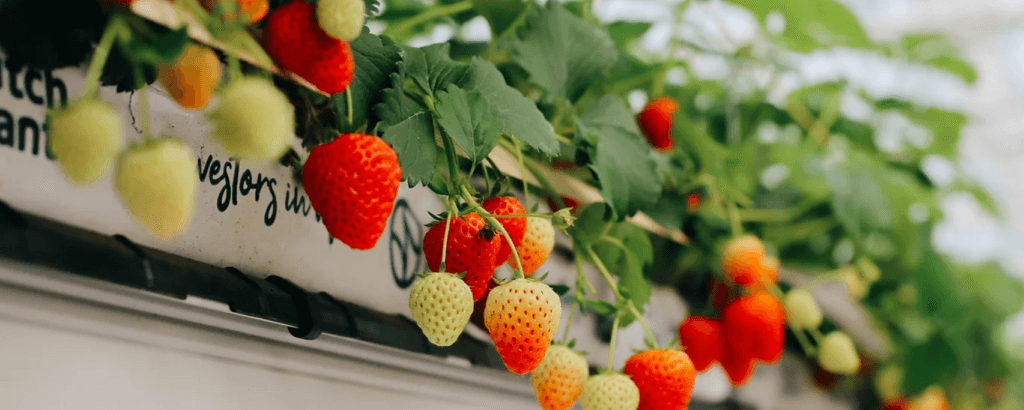
Agro-Farm, operated by OSS HOLDING, is a high-potential agribusiness focused on growing premium-quality Sensation strawberries year-round using geothermal greenhouse technology. This sustainable model enables consistent harvests, reduces heating costs, and allows for efficient production aligned with modern agricultural standards.
The company currently operates a fully functional 1-hectare greenhouse and plans to lease another 2-hectare greenhouse. The company currently operates at full sales capacity, successfully distributing 100% of its agricultural output without inventory surplus. This strong market position has been further reinforced through long-term letters of intent executed with all principal buyers referenced in Section 4.
These binding agreements establish a strategic framework for tripling sales volumes while maintaining existing commercial terms. The contracts serve to:
· Ensure guaranteed off-take for expanded production capacity
· Preserve current pricing mechanisms
· Formalize mutual growth commitments
· Ensure market stability through multi-year terms
The expansion initiative corresponds with the company's scaled production capabilities and rigorous quality control systems, enabling increased output volumes while consistently meeting premium product standards.
Georgia offers a highly attractive 0% corporate income tax rate on retained earnings. This policy significantly enhances business profitability and investment appeal by allowing companies to reinvest their full pre-tax profits back into growth and operations.
Georgia’s VAT exemption on strawberry production further improves the business margin structure.
Activities
OSS HOLDING operations span the entire supply chain, from cultivation to distribution:
· Controlled-environment strawberry cultivation
· Geothermal heating for year-round energy-efficient production
· Post-harvest processing and sustainable packaging
Greenhouse-based production does not require a specific agricultural license under Georgian law. The site operates in full compliance with environmental and sanitary regulations and is registered under Cadastral No. 43.20.41.300.
Operational Characteristics and Seasonality
Thanks to geothermal heating, OSS HOLDING operates continuously throughout the year, unlike traditional seasonal berry farms. This provides a major advantage in terms of consistency in revenue and long-term client relationships.
Key operational characteristics:
· Climate-controlled greenhouses ensure 12-month production
· Fully drip-irrigated substrate cultivation
· Locally sourced peat and organic fertilizers
· Imported seedlings of the Sensation variety with high yield and market value
Typical cycle:
· Seedlings replaced every 4 months (3 times a year)
· Harvest cycles begin 60 days after planting and continue for approximately 60 days.
· Each hectare supports approx. 180,000 plants per year
Production and planning are managed by an experienced agronomist and technical team.
Labor and HR Requirements
The company operates with a lean but highly efficient workforce, combining permanent agronomy staff with seasonal labor during peak months. Key staff roles include:
· Agronomist / Production Manager
· Greenhouse Operations Supervisor
· Sales and Logistics Coordinator
Currently, 15 seasonal workers work per 1 hectare; expansion by 2 hectares will require the involvement of an additional 30 seasonal workers.
Training and workforce development are a core part of the strategy, with plans to implement Standard Operating Procedures (SOPs) for all critical functions. The use of geothermal systems and automated irrigation reduces the need for large staff numbers, optimizing cost-efficiency.
Product range
The main product is premium-grade Sensation strawberries, recognized for their sweetness, durability during transportation, and market appeal. The company will introduce quality differentiation.
· Grade A: High-end retailers, domestic supermarkets and foodservice — 237,492 kg (≈ 73.3% of gross harvest)
· Grade B: Approximately 54,108 kg (≈ 16.7% of gross harvest) — directed to processing at €4.50/kg
Strawberries are considered high-liquidity products due to year-round demand and short shelf life, ensuring quick sales turnaround. Backup plans include selling surplus to processing plants and juice manufacturers at reduced margins if needed.
Collaterals
Existing property |
|
Real Estate property (Tbilisi, Lisi lake, Cadastral code: N 01.10.18.009.140.01.01.013) | 250,000 |
Freezing unit 40 ft | 26,000 |
Reverse “osmos” suction filter (RW10) | 28,000 |
Generator 450kw | 60,000 |
Titanium heat exchangers 5 units. | 10,000 |
Loader | 10,000 |
Electric carts 30 units (greenhouse internal railway system, Walzmatic AGRO) | 200,000 |
Total | 584,000 |
Acquired property |
|
Cooling and humidity control system, exhaust fans, internal ventilation, humidity sensors | 100,000 |
Future harvest |
|
Future harvest proceeds may also be pledged under inventory-based security agreements | 674,892 |
Valuation and Coverage
Total Asset Value Before Discount (€) | 1,358,892 |
Discount Applied for Ex.prop (25%) Discount Applied for Acq.prop (25%) Discount Applied for future harv.(50%) | 146,000 25,000 337,446
|
Collateral Value (Net) | 850,446 |
Highlights
Max target
10,000 USDC
Min target
5,000 USDC
Investors
5
Interest payments
12 months
Principal repayments
bullet
Total payments
monthly
Risk scoring
- CollateralCompany Assets
- Total risk scoreBBB
- Debt to equity1.79
- LTV124 %
- Credit history8/10
Details
Financial overview
The project has already received seed capital and in-kind contributions from the founder. The financial structure going forward relies on phased external financing aligned with the expansion plan.
Financial Model and Profitability:
Basis: Gross harvest = 324,000 kg; Losses 10% = 32,400 kg; Processing (Grade B) 16.7% = 54,108 kg; Marketable (Grade A) 73.3%= 237,492 kg.
Scenario outputs:
· Optimistic (Grade A = €9.0/kg):
o Grade A revenue: 237,492 × €9.0 = €2,137,428
o Grade B revenue: 54,108 × €4.5 = €243,486
o Total Revenue: €2,380,914
o Operational Profit: €2,380,914 - €1,228,800 = €1,152,114
· Base (Grade A = €7.5/kg):
o Grade A revenue: 237,492 × €7.5 = €1,781,190
o Grade B revenue: 54,108 × €4.5 = €243,486
o Total Revenue: €2,024,676
o Operational Profit: €2,024,676-€1,228,800=€795,876
· Conservative (Grade A = €6.5/kg):
o Grade A revenue: 237,492 × €6.5 = €1,543,314
o Grade B revenue: 54,108 × €4.5 = €243,486
o Total Revenue: €1,786,800
o Operational Profit: €1,786,800 - €1,228,800 = €558,000
Key Financial Indicator:
· Total Investment Required: €1,058,000
· Projected Revenue (Base scenario, 2026): €2,024,676
· Projected Operational Profit (Base scenario, 2026): €795,876
Each hectare generates an estimated €674,892 in annual revenue, with net profits exceeding €265,292 under previous assumptions.
The projected Phase1 total gross harvest for 2026 is 324,000 kg (for 3 ha):
· Grade B (processing): 54,108 kg (16.7% of gross harvest) — directed to processing at €4.50/kg.
· Losses (10%): 32,400 kg (10% of 324,000 kg) — expected irrecoverable losses due to disease, damage during harvest and post-harvest handling.
· Grade A (marketable): 237,492 kg (remaining part of gross harvest).
Phase1 projected revenue (Base price €7.50/kg for Grade A):
· Grade A revenue: 237,492 kg × €7.50/kg = €1,781,190
· Grade B revenue: 54,108 kg × €4.50/kg = €243,486
· Total Revenue: €2,024,676
To complement the projections, the following is a breakdown of realistic annual expenses for a 1-hectare operation:
· Strawberry seedlings (annual replacement): €108,000/ha
· Seasonal labor (peak months): €7,500/month × 8 months = €60,000/year
· Permanent staff: €3,000/month × 12 months = €36,000/year
· Peat €20,000/year
· Fertilizers: €100,000/year
· Electricity (lighting, irrigation, ventilation): €2,000/month× 12 months = €24,000/year
· Heating (geothermal backup & humidity control): €4,000/month × 12 months = €48,000/year for the entire geothermal hub, not per hectare
· Land lease: €3,800/month × 12 months = €45,600/year
Per hectare total: €441,600/year
To complement the projections, the following is a breakdown of realistic annual expenses for a 3-hectare operation:
· Strawberry seedlings (annual replacement): €108,000/ha × 3 ha = €324,000/year
· Seasonal labor (peak months): €7,500/month × 3 ha × 8 months = €180,000/year
· Permanent staff: €3,000/month × 3 ha × 12 months = €108,000/year
· Peat €20,000 × 3 ha = €60,000/year
· Fertilizers: €100,000 × 3 ha = €300,000/year
· Electricity (lighting, irrigation, ventilation): €2,000/month × 3 ha × 12 months = €72,000/year
· Heating (geothermal backup & humidity control): €4,000/month × 12 months = €48,000/year for the entire geothermal hub, not per hectare
· Land lease: €3,800/month × 3 ha × 12 months = €136,800/year
Total €1228,800/year
Per hectare total: €1228,800/3=409,600/year
The average profitability per hectare remains high throughout, driven by premium positioning, consistent production, and cost efficiencies from geothermal energy.
• Geothermal heating license cost: €4,000 per month for the entire agro hub
• Equivalent gas heating cost: ~€8,500 per hectare per month (based on gas prices in the Gori region in 2023–2024)
• Geothermal heating license
€4,000 × 12 months = €48,000 per year
• Gas heating equivalent (4 months):
€8,500 × 3 ha × 4 months = €102,000 per year
Heating of greenhouses is fully based on geothermal energy — this system operates year-round:
• In winter, for primary heating;
• In summer, for humidity control (by heating and opening the greenhouse roofs to release excess moisture).
Annual savings vs gas heating: ~€54,000 per year
Year / Period | Turnover (€) | Gross Profit (€) | Operating Profit (€) | Interest Payments | Net Profit (€) | Notes |
2024 (actual) | 364,110 | 169,420 | 108,250 |
| 108,250 | The operational year was incomplete due to the phased launch of the first hectare. |
2025 (1 ha projected) | 675,892 | 386,892 | 233,292 | (35,267)
| 198,025 | Full year, 1 hectare in operation |
H1 2025 (actual) | 337,945 | 193,446 | 116,646 |
| 116,646 | Half-year performance with 1 hectare |
2026 (3 ha projected) | 2,024,676 | 1,160,676 | 795,876 | (211,600) | 584,276 | Base scenario (€7.5/kg Grade A) |
Notes and Assumptions
· Usable yield sold as Grade B is priced at €4.5/kg; remaining marketable yield is sold at scenario-specific Grade A prices.
· All other assumptions, costs and tranche structure remain unchanged from the original document unless explicitly stated.
Description of the Loan
To support expansion of the Agro-Farm project from 1 hectare to 3 hectares by the 4Q of 2025.
Total: €1,058,000
| Tranche 1 | Amount (€) | Tranche amount (€) |
1 | Greenhouse film (25000м2 1,8€ м2), Supplier: Netafim | 45,000 | 245,000 |
2 | Greenhouse Structure materials (motors guide gears frames according to the defect list), including installation work | 100,000 | |
3 | Metal, pipes 55, 33, square tube, cables, agro tape, including installation work | 100,000 | |
| Tranche 2 |
| |
4 | Special “Agrofabric” 20000м2, Agrofabric setup/deployment work | 20,000 | 242,000 |
5 | Greenhouse Film coating related works, clips, etc | 125,000 | |
6 | Irrigation System, computer, Irrigation watering hoses fertilizer mixing tanks (manufacturer: Netafim, Israel) | 100,000 | |
Tranche 3 |
| ||
7 | Seedlings (plants) 360000 pcs, 0,6 € each (Mullerseeds Holland) | 216,000 | 316,000 |
8 | Cooling and humidity control system, exhaust fans, internal ventilation, humidity sensors | 100,000 | |
Tranche 4 |
| ||
9 | Special Pots for Seedlings (30,000 units) “hortihub” | 15,000 | 255,000 |
10 | “Peat” (two trucks) Supplier “Charge tld” | 40,000 |
1,058,000 |
11 | Fertilizers (BAYER) https://www.bayer.com/en/agriculture/products | 200,000 | |
| Total |
Key facts
- OSS HOLDING LLC was foundedOct 22, 2021
- Start of active work/productionMay 01, 2022
Borrower info
OSS HOLDING LLC
Tbilisi, Guram Phanjikidze Street No.10, Apt. 43, 0160
Agro-Farm, operated by OSS HOLDING, is a high-potential agribusiness focused on growing premium-quality Sensation strawberries year-round using geothermal greenhouse technology. This sustainable model enables consistent harvests, reduces heating costs, and allows for efficient production aligned with modern agricultural standards.
- Reg No.405489234
Market description & size

Market Size & Consumption
Annual Strawberry Consumption in Georgia: ~12,000–15,000 metric tons (MT).
o Domestic production: ~8,000–10,000 MT (May–October).
o Imports: ~2,000–3,000 MT (November–April), mainly from Turkey, Iran, and Egypt.
o Per capita consumption: ~3.5 kg/year (higher than the global average of 2.7 kg).
Regional Market (Caucasus – Armenia & Azerbaijan):
o Combined annual demand: ~20,000–25,000 MT.
o Local production is insufficient, leading to year-round imports, especially in winter.
o Import prices are 15–20% higher than in Georgia due to logistics and tariffs.
Retail Market Value (Georgia): ~€25–30 million annually.
o Supermarkets & hypermarkets (Carrefour, Agrohub, Foodmart): 60% of sales.
o Local markets & small vendors: 30%.
o Food processing (juices, jams, bakeries): 10%.
Supply Gaps & Import Dependency
Seasonal Shortfall (November–April):
o Georgia imports ~30% of its winter strawberry
o Price premiums: Winter strawberries sell for 40–50% more than seasonal supply.
Quality Issues with Imports:
o Imported strawberries often have shorter shelf life due to long transit times.
o Consumers prefer fresher, locally grown berries, creating an opportunity for year-round production.
Growth Drivers & Trends
Increasing Demand for Year-Round Supply:
o Supermarkets and foodservice providers seek stable, high-quality local suppliers to replace imports.
o Geothermal greenhouses can capture 10–15% of Georgia’s winter market (~1,500 MT) within 2–3 years.
Export Potential:
o Armenia & Azerbaijan: Combined import demand of ~5,000 MT/year.
o Middle East (UAE, Saudi Arabia): High-value market for premium berries (€8–12/kg).
Government & Industry Support:
o VAT exemption on strawberry production improves profitability.
o EU-compatible agricultural standards open export opportunities to Europe.
Competitive Landscape
Local Producers:
o Mostly small-scale, seasonal farms with low yields (15–20 MT/ha vs. OSS HOLDING’s 100+ MT/ha).
o Lack of geothermal/controlled-environment agriculture (CEA) technology.
Importers:
o Dominated by Turkish and Iranian suppliers, but face logistics costs and quality concerns.
o OSS HOLDING’s local production offers fresher, higher-margin berries.
Conclusion: Market Opportunity Summary
Total addressable market (Georgia + exports): ~€30–40 million annually.
Key advantage: Year-round premium supply in a market reliant on seasonal production and imports.